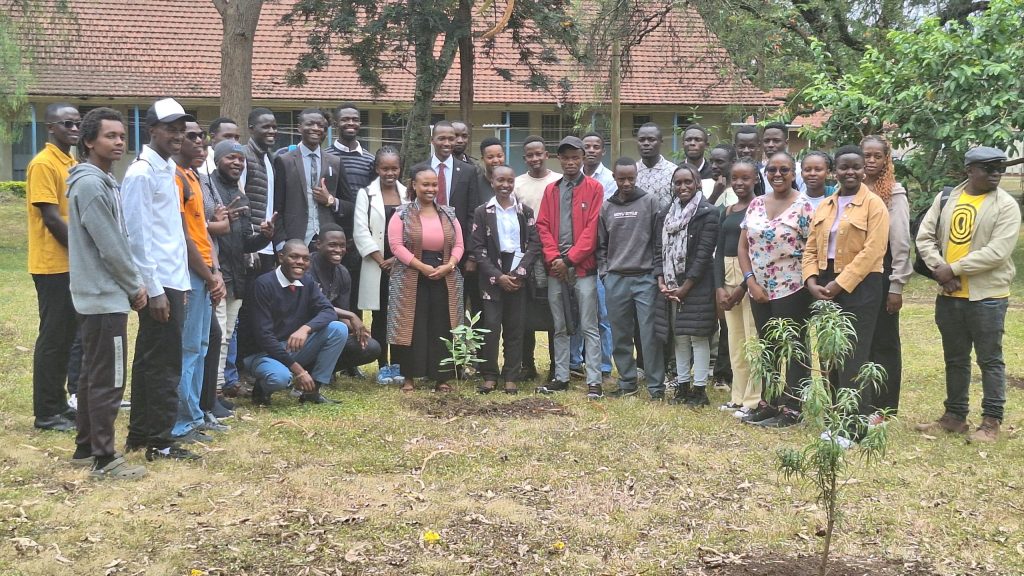
Kenyatta University Green Week 2025. PHOTO : COURTESY, Pauline Afande
Kenyatta University’s Green Week 2025 theme “Empowering Youths for Inclusive Climate Solutions and Resilience” served as a powerful testament to the interconnection of environmental preservation and social justice. The event, which brought together diverse organizations and community-based initiatives, illuminated the critical intersections of gender equity, mental health, and economic empowerment within the broader context of climate action. The speakers and presentations revealed a shared understanding that true climate resilience cannot be achieved without addressing the unique challenges faced by marginalized communities, particularly women and girls.
The day began with a symbolic and practical act: a tree-planting session. Leaders from the various organizations present joined together to plant trees, offering words of affirmation and hope for their growth. This act represented a tangible commitment to climate action, with the trees envisioned to provide shade, habitat for birds, and contribute to the institution’s environmental well-being. Furthermore, the leaders recognized the trees’ potential to provide raw materials essential for timber industries, highlighting the interconnection of environmental sustainability and economic development. This opening ceremony set the tone for an event focused on tangible solutions and long-term impact.
Martha Njambi of Giving Light to Society delivered a compelling presentation highlighting the organization’s multifaceted approach. She emphasized how their programs directly contribute to climate resilience by tackling period poverty and mental health. Njambi explained the significance of their “Kairetu” program, meaning “girl,” which focuses on providing reusable sanitary pads to women and girls from vulnerable backgrounds. This initiative not only addresses the pressing issue of period poverty but also directly combats the environmental impact of non-biodegradable waste. She further underscored the disproportionate impact of climate change on women, particularly those reliant on agriculture, and detailed how the organization’s free counseling and mentorship programs address climate-related anxieties and stress. By recognizing the vital link between mental well-being and effective climate action, Giving Light to Society is demonstrating a holistic approach to building community resilience.
Joseph Makokha of Ubunifu Hub, a project of Greenpeace Africa, showcased their commitment to empowering youth through economic opportunities. He detailed the organization’s programs, which provide youth funds of up to Ksh 50,000 to support sustainable climate action initiatives, regardless of gender. This investment in youth-led solutions is further strengthened by their “aftercare” program and learning trips, which ensure that young entrepreneurs receive the necessary support to implement their ideas effectively. Makokha also highlighted the role of their podcast in amplifying youth voices and advocating for climate action. By providing both financial and educational resources, Ubunifu Hub is fostering a generation of climate leaders who are equipped to drive sustainable change.
Tony Kennedy of the Peer Mentor Association of Kenya emphasized the organization’s focus on nurturing future climate leaders through mentorship and education. He described their work in establishing environmental clubs in schools across various regions, including Kiambu, Nairobi, Turkana, and the Nyanza region. Alongside their tree planting initiatives, they provide essential mentorship to young girls on teenage pregnancies, menstrual health, and the importance of abstinence. Recognizing the interconnection of social and environmental issues, the organization also addresses economic disparities by providing sanitary towels and school uniforms to those in need. By integrating mentor-ship, education, and material support, the Peer Mentor Association of Kenya is cultivating a generation of young people who are committed to both environmental stewardship and social justice.
The event underscored the importance of integrating gender-sensitive approaches into climate action, recognizing that youth-led initiatives are playing a crucial role in driving sustainable change. Addressing period poverty, mental health, and economic empowerment were identified as essential components of building climate resilience. The work of Giving Light to Society, Ubunifu Hub, and the Peer Mentor Association of Kenya, among others, is vital to the communities they serve, offering hope and practical solutions in the face of climate change. Let us all support these vital initiatives and work together to create a more just and sustainable future for all.